Field notes · 6 min · by our head guide in Lamai
How to read a river crossing
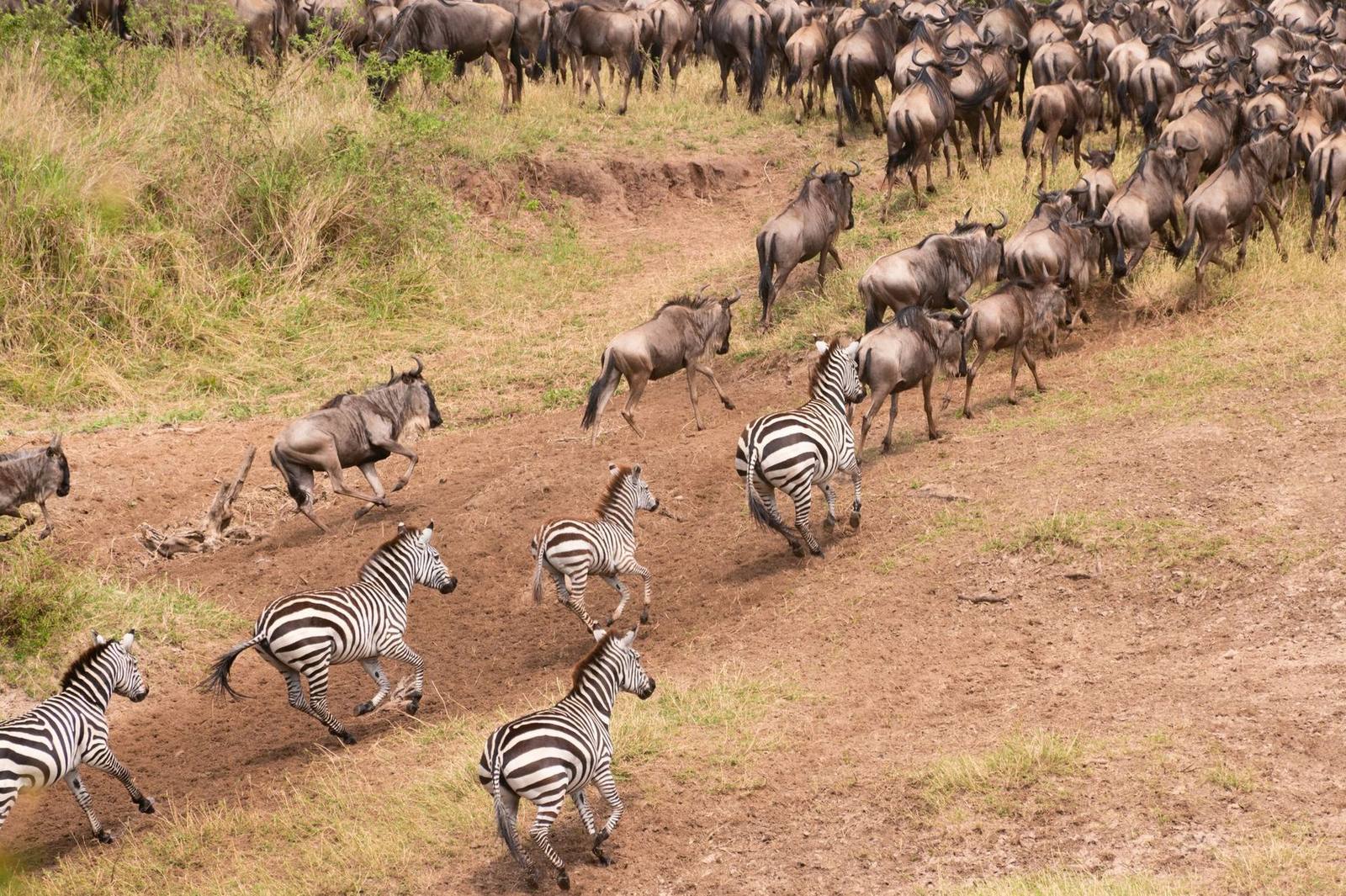
The herd does not cross when it arrives. It gathers on the bank, sometimes ten thousand deep, and waits. Nobody knows exactly what tips it: a gap in the trees, a zebra that goes first, the wind turning. Some days it is 8 am. Some days it is never.
We park well back, engine off, on the downwind side, and we do not move when the first animals go down the bank. Vehicles that rush in turn the herd back. Patience gives you the jump; impatience gives you dust.
Bring water, a cushion and a long lens. The average wait in August is three hours and forty minutes.
The best crossing I ever saw, we nearly missed. Our guests wanted lunch.
Guiding · 4 min
The 4 am rule
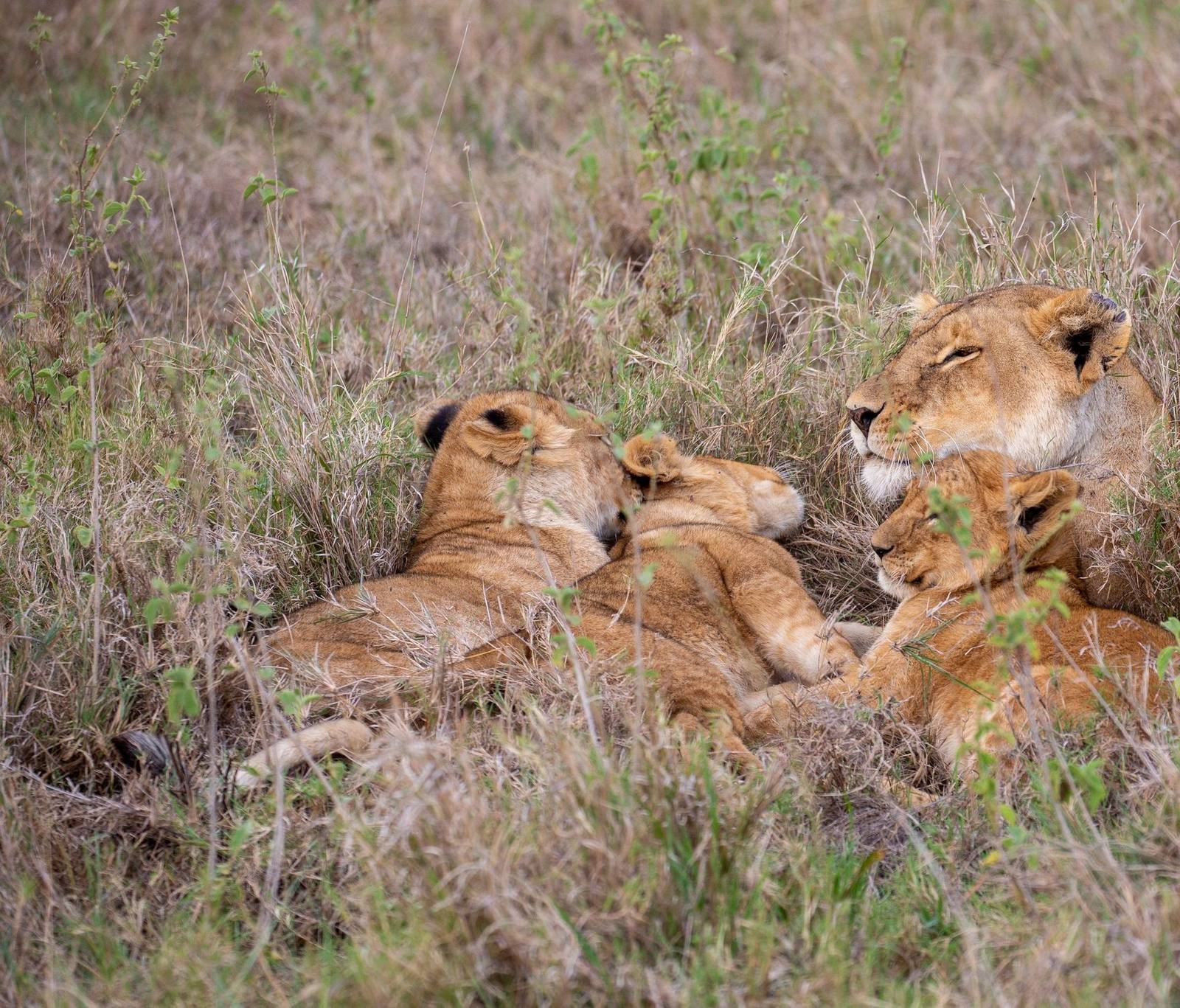
Lions hunt in the cool hours. By nine the plain is hot and they lie flat under a bush, as still as rocks. So our guides leave camp at first light and the coffee comes with you, in a flask, with a slice of banana bread.
You will see more in the first two hours of the day than in the next six. The afternoon is for sleeping, the pool, and the second best light of the day.
Sleep is for the afternoon. The plain is for the morning.
Conservation · 5 min
Ndutu Moon, packed away
Every March, when the herd leaves the short-grass plains, so do we. Eight tents, the kitchen, the solar array and the water tanks go on four trucks. The grass grows back over the floor in three weeks.
In December we come back to a slightly different spot, chosen with the wardens for where the herd will calve. There is no road, no foundation and nothing to see when we are gone.
Three weeks after we leave, you cannot tell we were there.